
Unit 8 It must belong to Carla. SectionA Grammar focus 课件(共20张PPT)
文档属性
| 名称 | Unit 8 It must belong to Carla. SectionA Grammar focus 课件(共20张PPT) |

|
|
| 格式 | zip | ||
| 文件大小 | 4.4MB | ||
| 资源类型 | 教案 | ||
| 版本资源 | 人教新目标(Go for it)版 | ||
| 科目 | 英语 | ||
| 更新时间 | 2021-11-01 00:00:00 | ||
图片预览

文档简介
(共20张PPT)
Unit8 SectionA Grammar focus-4c
Made By Mary
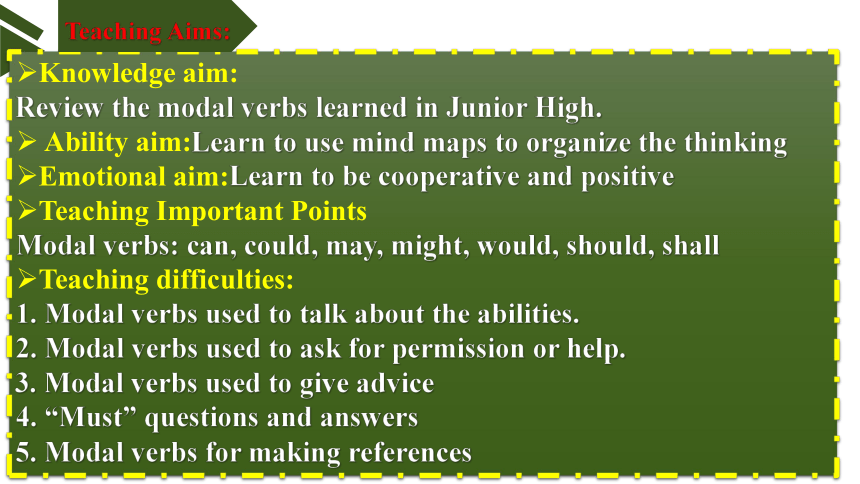
Knowledge aim:
Review the modal verbs learned in Junior High.
Ability aim:Learn to use mind maps to organize the thinking
Emotional aim:Learn to be cooperative and positive
Teaching Important Points
Modal verbs: can, could, may, might, would, should, shall
Teaching difficulties:
1. Modal verbs used to talk about the abilities.
2. Modal verbs used to ask for permission or help.
3. Modal verbs used to give advice
4. “Must” questions and answers
5. Modal verbs for making references
Teaching Aims:
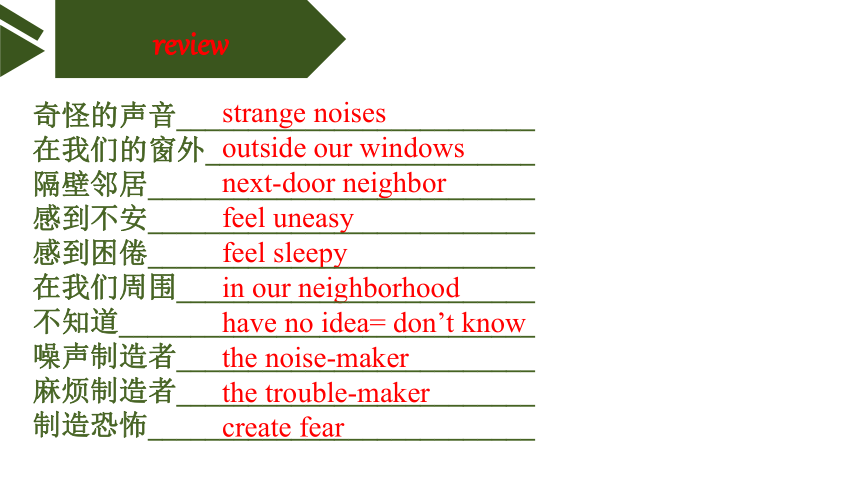
review
strange noises
outside our windows
next-door neighbor
feel uneasy
feel sleepy
in our neighborhood
have no idea= don’t know
the noise-maker
the trouble-maker
create fear
奇怪的声音_________________________
在我们的窗外_______________________
隔壁邻居___________________________
感到不安___________________________
感到困倦___________________________
在我们周围_________________________
不知道_____________________________
噪声制造者_________________________
麻烦制造者_________________________
制造恐怖___________________________
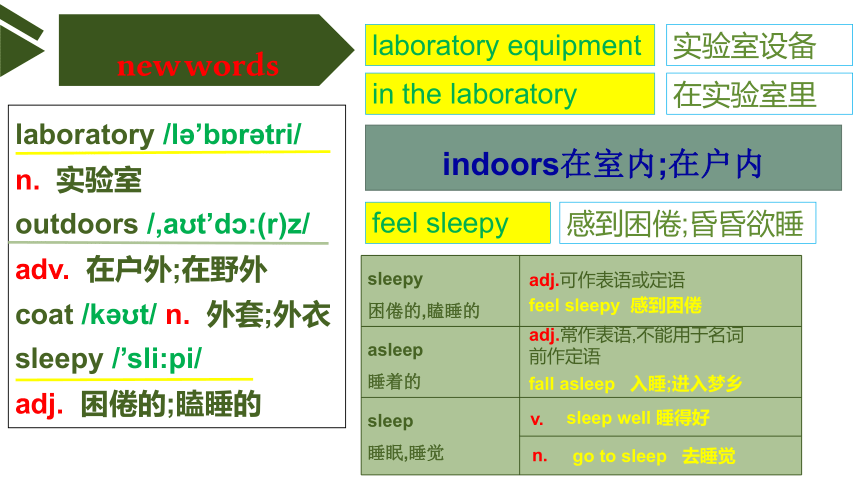
new words
laboratory /l ’b r tri/
n. 实验室
outdoors /,a t’d :(r)z/
adv. 在户外;在野外
coat /k t/ n. 外套;外衣
sleepy /’sli:pi/
adj. 困倦的;瞌睡的
laboratory equipment
实验室设备
in the laboratory
在实验室里
indoors在室内;在户内
feel sleepy
感到困倦;昏昏欲睡
sleepy 困倦的,瞌睡的
asleep 睡着的
sleep 睡眠,睡觉
adj.可作表语或定语
adj.常作表语,不能用于名词前作定语
v.
n.
feel sleepy 感到困倦
fall asleep 入睡;进入梦乡
sleep well 睡得好
go to sleep 去睡觉
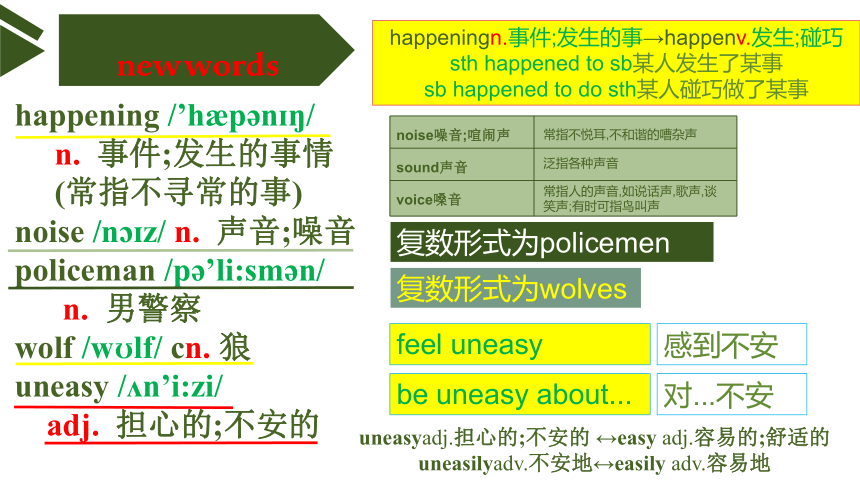
happening /’h p n /
n. 事件;发生的事情
(常指不寻常的事)
noise /n z/ n. 声音;噪音
policeman /p ’li:sm n/
n. 男警察
wolf /w lf/ cn. 狼
uneasy / n’i:zi/
adj. 担心的;不安的
new words
feel uneasy
感到不安
be uneasy about...
对...不安
uneasyadj.担心的;不安的 easy adj.容易的;舒适的
uneasilyadv.不安地 easily adv.容易地
复数形式为wolves
复数形式为policemen
noise噪音;喧闹声
sound声音
voice嗓音
常指不悦耳,不和谐的嘈杂声
泛指各种声音
常指人的声音,如说话声,歌声,谈笑声;有时可指鸟叫声
happeningn.事件;发生的事→happenv.发生;碰巧
sth happened to sb某人发生了某事
sb happened to do sth某人碰巧做了某事
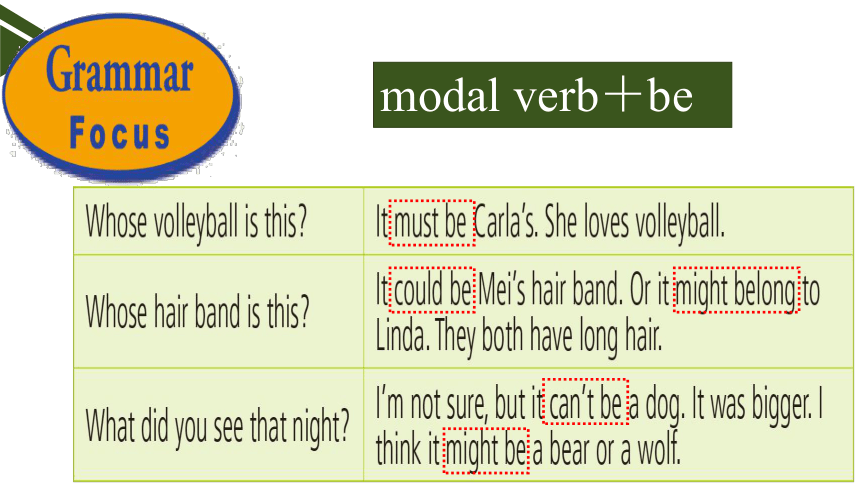
modal verb+be
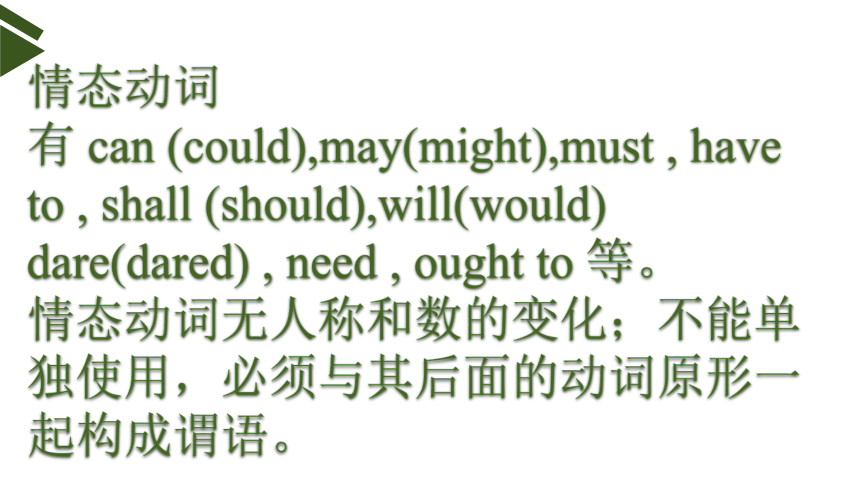
情态动词
有 can (could),may(might),must , have to , shall (should),will(would) dare(dared) , need , ought to 等。
情态动词无人称和数的变化;不能单独使用,必须与其后面的动词原形一起构成谓语。
can / could 1. 表示能力(体力、知识、技能)Can you lift the heavy box 2. 表示请求和允许 Can I go now 3. 表示推测 ,用于否定句中 “不可能” 表示惊异、怀疑或不相信 —That man must be our headmaster .
那个男人一定是我们的校长。 —No, it can’t be him . He is holding a meeting now . 不,不可能是他,他正在主持会议。
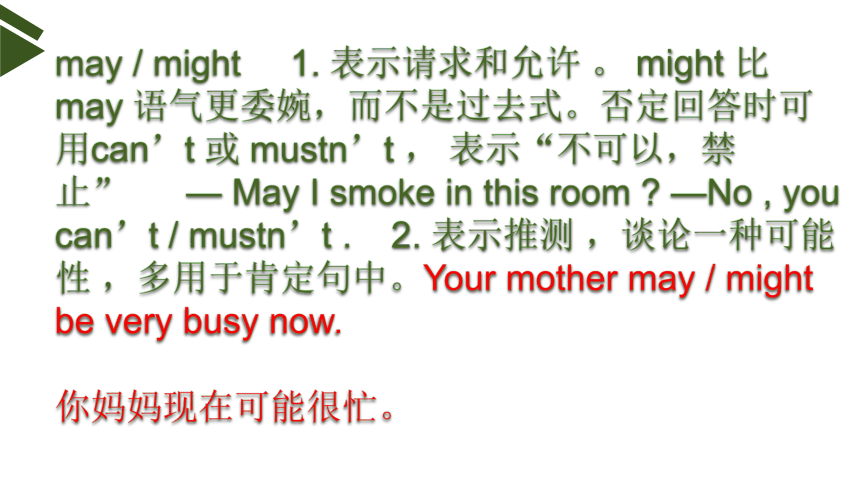
may / might 1. 表示请求和允许 。 might 比 may 语气更委婉,而不是过去式。否定回答时可用can’t 或 mustn’t , 表示“不可以,禁止” — May I smoke in this room —No , you can’t / mustn’t . 2. 表示推测 ,谈论一种可能性 ,多用于肯定句中。Your mother may / might be very busy now.
你妈妈现在可能很忙。
must / have to 1. must 必须 must 引出的一般疑问句时,否定回答用needn’t / don’t have to 不必—Must we hand in our homework today —No , you needn’t / don’t have to . / Yes , you must .2. must 是说话人的主观看法,而have to 则强调客观需要。must 只有一般现在时, have to 有更多的时态形式。3. must 表示推测 ,指可能性较大 “一定”用于肯定句中。
must / may / might / could / can’t 表示推测的用法 must 可能性最大,“一定” might / may / could 可能性较大 “可能” can 否定意义的推测 “不可能”
情态动词表推测时,用不同的形式表示不同的时态。 表示对现在情况的推测用“情态动词+动词原形” 表示对正在发生的事情的推测用“情态动词 + be doing ” 表示对过去或完成事件的推测用“情态动词+ have done”
might be
must be
could be
can’t be
could be / must be
getting colder / cold outside
having a sore throat / ill
must be delicious
be that boring
It could be a girl’s room because it’s very tidy.
I guess so. But it might be a boy’s room because the clothes look like boys’ clothes.
( )1.[2019·成都] —Is that Tom over there —It be him. He is on the plane to Chengdu now. A.can't B.might not C.must D.mustn't( )2.[2019·常州] — I keep the book for a week —Sorry, I'm afraid you . A.Need; couldn't B.Need; can't C.May; couldn't D.May; can't( )3.[2019·日照] You be very tired with the long drive. Let's stop to have a rest. A.must B.can C.shall D.need( )4.[2018·宜昌] —Mom, I've signed for a big box by Future Express(快递). What's in it —I'm not sure. It be a present from your brother. A.might B.must C.should D.will
practice
A
D
A
A
summary
modal verb+be
homework
Read the passage in 3a.
Do the exercises in students’ book
Thank you for your listenning!
Mary
Unit8 SectionA Grammar focus-4c
Made By Mary
Knowledge aim:
Review the modal verbs learned in Junior High.
Ability aim:Learn to use mind maps to organize the thinking
Emotional aim:Learn to be cooperative and positive
Teaching Important Points
Modal verbs: can, could, may, might, would, should, shall
Teaching difficulties:
1. Modal verbs used to talk about the abilities.
2. Modal verbs used to ask for permission or help.
3. Modal verbs used to give advice
4. “Must” questions and answers
5. Modal verbs for making references
Teaching Aims:
review
strange noises
outside our windows
next-door neighbor
feel uneasy
feel sleepy
in our neighborhood
have no idea= don’t know
the noise-maker
the trouble-maker
create fear
奇怪的声音_________________________
在我们的窗外_______________________
隔壁邻居___________________________
感到不安___________________________
感到困倦___________________________
在我们周围_________________________
不知道_____________________________
噪声制造者_________________________
麻烦制造者_________________________
制造恐怖___________________________
new words
laboratory /l ’b r tri/
n. 实验室
outdoors /,a t’d :(r)z/
adv. 在户外;在野外
coat /k t/ n. 外套;外衣
sleepy /’sli:pi/
adj. 困倦的;瞌睡的
laboratory equipment
实验室设备
in the laboratory
在实验室里
indoors在室内;在户内
feel sleepy
感到困倦;昏昏欲睡
sleepy 困倦的,瞌睡的
asleep 睡着的
sleep 睡眠,睡觉
adj.可作表语或定语
adj.常作表语,不能用于名词前作定语
v.
n.
feel sleepy 感到困倦
fall asleep 入睡;进入梦乡
sleep well 睡得好
go to sleep 去睡觉
happening /’h p n /
n. 事件;发生的事情
(常指不寻常的事)
noise /n z/ n. 声音;噪音
policeman /p ’li:sm n/
n. 男警察
wolf /w lf/ cn. 狼
uneasy / n’i:zi/
adj. 担心的;不安的
new words
feel uneasy
感到不安
be uneasy about...
对...不安
uneasyadj.担心的;不安的 easy adj.容易的;舒适的
uneasilyadv.不安地 easily adv.容易地
复数形式为wolves
复数形式为policemen
noise噪音;喧闹声
sound声音
voice嗓音
常指不悦耳,不和谐的嘈杂声
泛指各种声音
常指人的声音,如说话声,歌声,谈笑声;有时可指鸟叫声
happeningn.事件;发生的事→happenv.发生;碰巧
sth happened to sb某人发生了某事
sb happened to do sth某人碰巧做了某事
modal verb+be
情态动词
有 can (could),may(might),must , have to , shall (should),will(would) dare(dared) , need , ought to 等。
情态动词无人称和数的变化;不能单独使用,必须与其后面的动词原形一起构成谓语。
can / could 1. 表示能力(体力、知识、技能)Can you lift the heavy box 2. 表示请求和允许 Can I go now 3. 表示推测 ,用于否定句中 “不可能” 表示惊异、怀疑或不相信 —That man must be our headmaster .
那个男人一定是我们的校长。 —No, it can’t be him . He is holding a meeting now . 不,不可能是他,他正在主持会议。
may / might 1. 表示请求和允许 。 might 比 may 语气更委婉,而不是过去式。否定回答时可用can’t 或 mustn’t , 表示“不可以,禁止” — May I smoke in this room —No , you can’t / mustn’t . 2. 表示推测 ,谈论一种可能性 ,多用于肯定句中。Your mother may / might be very busy now.
你妈妈现在可能很忙。
must / have to 1. must 必须 must 引出的一般疑问句时,否定回答用needn’t / don’t have to 不必—Must we hand in our homework today —No , you needn’t / don’t have to . / Yes , you must .2. must 是说话人的主观看法,而have to 则强调客观需要。must 只有一般现在时, have to 有更多的时态形式。3. must 表示推测 ,指可能性较大 “一定”用于肯定句中。
must / may / might / could / can’t 表示推测的用法 must 可能性最大,“一定” might / may / could 可能性较大 “可能” can 否定意义的推测 “不可能”
情态动词表推测时,用不同的形式表示不同的时态。 表示对现在情况的推测用“情态动词+动词原形” 表示对正在发生的事情的推测用“情态动词 + be doing ” 表示对过去或完成事件的推测用“情态动词+ have done”
might be
must be
could be
can’t be
could be / must be
getting colder / cold outside
having a sore throat / ill
must be delicious
be that boring
It could be a girl’s room because it’s very tidy.
I guess so. But it might be a boy’s room because the clothes look like boys’ clothes.
( )1.[2019·成都] —Is that Tom over there —It be him. He is on the plane to Chengdu now. A.can't B.might not C.must D.mustn't( )2.[2019·常州] — I keep the book for a week —Sorry, I'm afraid you . A.Need; couldn't B.Need; can't C.May; couldn't D.May; can't( )3.[2019·日照] You be very tired with the long drive. Let's stop to have a rest. A.must B.can C.shall D.need( )4.[2018·宜昌] —Mom, I've signed for a big box by Future Express(快递). What's in it —I'm not sure. It be a present from your brother. A.might B.must C.should D.will
practice
A
D
A
A
summary
modal verb+be
homework
Read the passage in 3a.
Do the exercises in students’ book
Thank you for your listenning!
Mary
同课章节目录
- Unit 1 How can we become good learners.
- Section A
- Section B
- Unit 2 I think that mooncakes are delicious!
- Section A
- Section B
- Unit 3 Could you please tell me where the restroom
- Section A
- Section B
- Unit 4 I used to be afraid of the dark.
- Section A
- Section B
- Unit 5 What are the shirts made of?
- Section A
- Section B
- Review of Units 1-5
- Unit 6 When was it invented?
- Section A
- Section B
- Unit 7 Teenagers should be allowed to choose their
- Section A
- Section B
- Unit 8 It must belong to Carla.
- Section A
- Section B
- Unit 9 I like music that I can dance to.
- Section A
- Section B
- Unit 10 You're supposed to shake hands.
- Section A
- Section B
- Review of Units 6-10
- Unit 11 Sad movies make me cry.
- Section A
- Section B
- Unit 12 Life is full of the unexpected
- Section A
- Section B
- Unit 13 We're trying to save the earth!
- Section A
- Section B
- Unit 14 I remember meeting all of you in Grade 7.
- Section A
- Section B
- Review of Units 11-14