
Unit 10 I've had this bike for three years Section B 2a-2e 课件(共36张PPT)
文档属性
| 名称 | Unit 10 I've had this bike for three years Section B 2a-2e 课件(共36张PPT) |
|
|
| 格式 | ppt | ||
| 文件大小 | 2.4MB | ||
| 资源类型 | 教案 | ||
| 版本资源 | 人教新目标(Go for it)版 | ||
| 科目 | 英语 | ||
| 更新时间 | 2022-05-28 00:00:00 | ||
图片预览
文档简介
(共36张PPT)
Unit 10
I’ve had this bike for three years.
人教版八年级英语下册
Section B 2a-2d
Objectives
To learn about Hometown Feelings
and understand the main idea of the
passage.
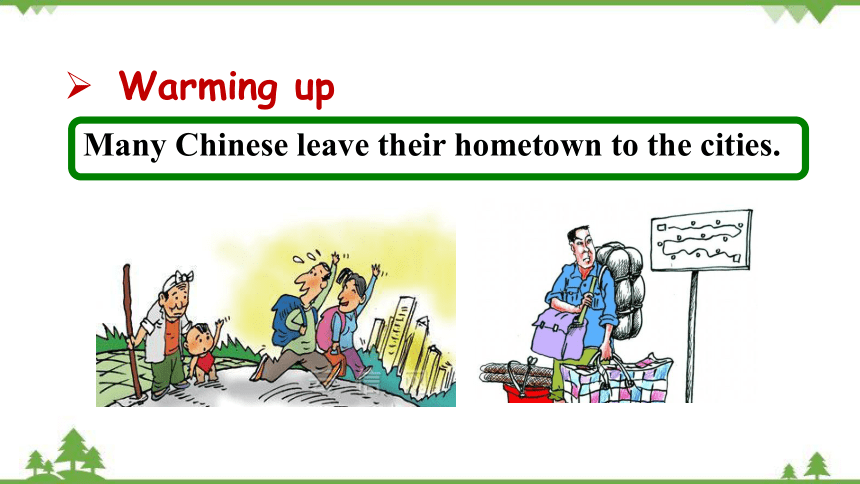
To learn new words: nowadays,
search, among, shame, regard, count,
opposite,especially, consider, hold …
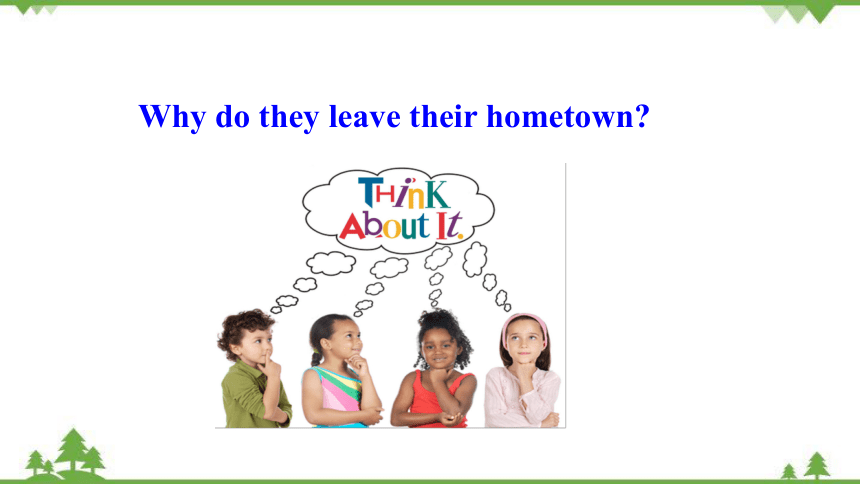
Many Chinese leave their hometown to the cities.
Warming up
Why do they leave their hometown
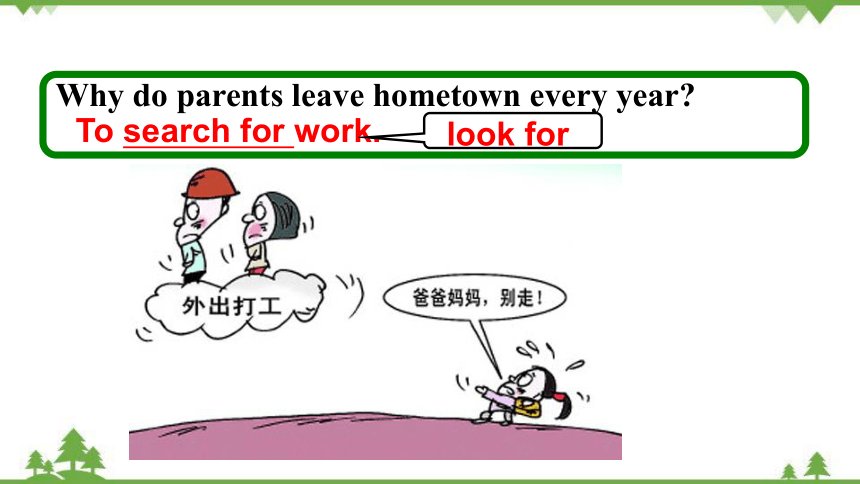
Why do parents leave hometown every year
To search for work.
look for
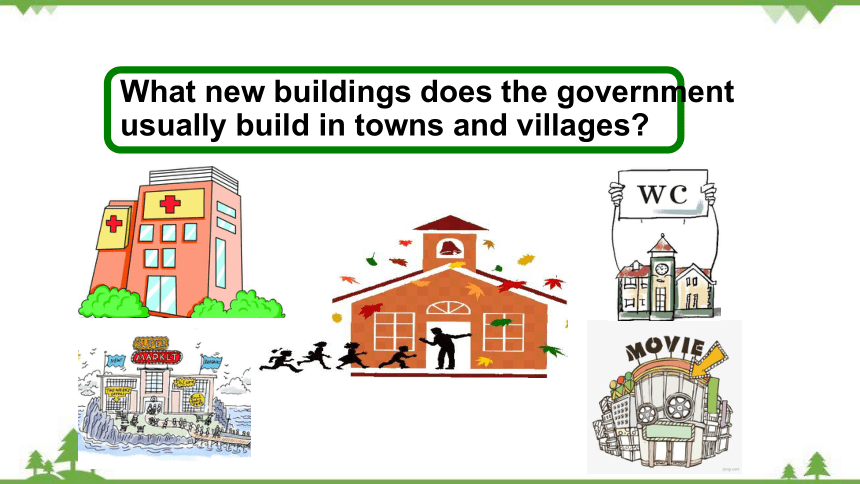
What new buildings does the government
usually build in towns and villages
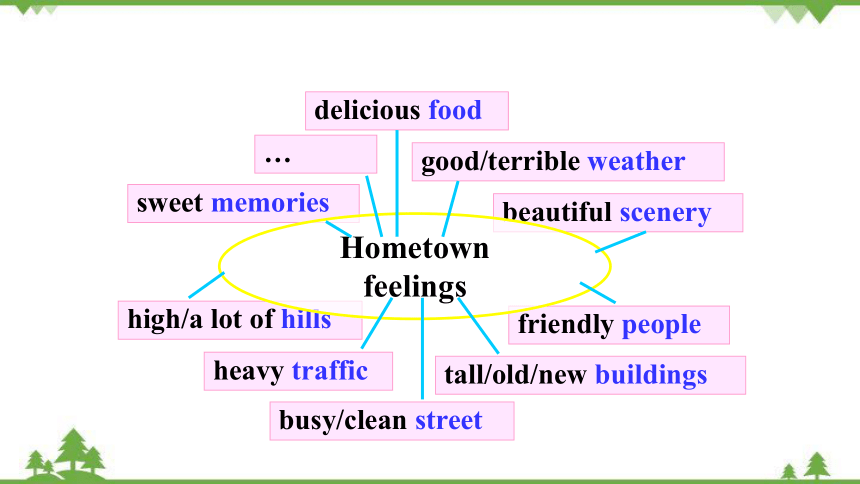
delicious food
good/terrible weather
beautiful scenery
sweet memories
high/a lot of hills
heavy traffic
busy/clean street
tall/old/new buildings
friendly people
…
Hometown feelings
1. Why do millions of Chinese leave the
countryside every year
Answer the questions before you read. Then read the passage to find out if your answers are the same as in the passage.
Millions of Chinese leave the countryside to search for work in the cities.
2a
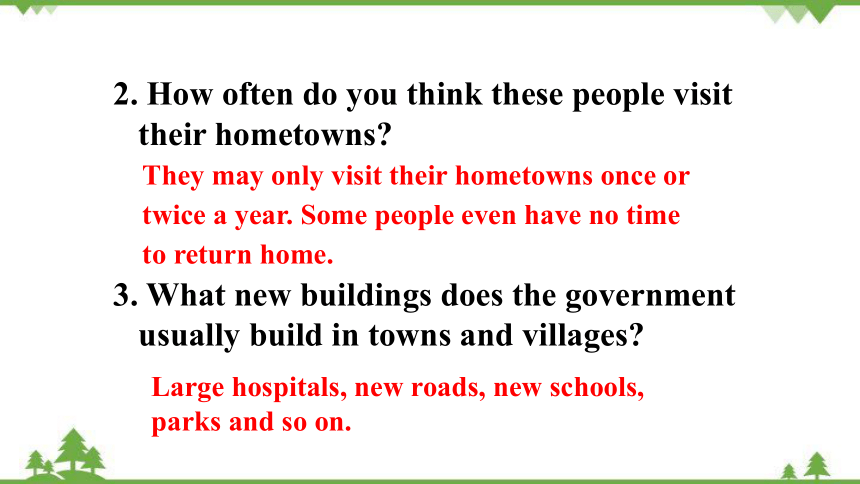
2. How often do you think these people visit
their hometowns
3. What new buildings does the government
usually build in towns and villages
They may only visit their hometowns once or twice a year. Some people even have no time to return home.
Large hospitals, new roads, new schools, parks and so on.
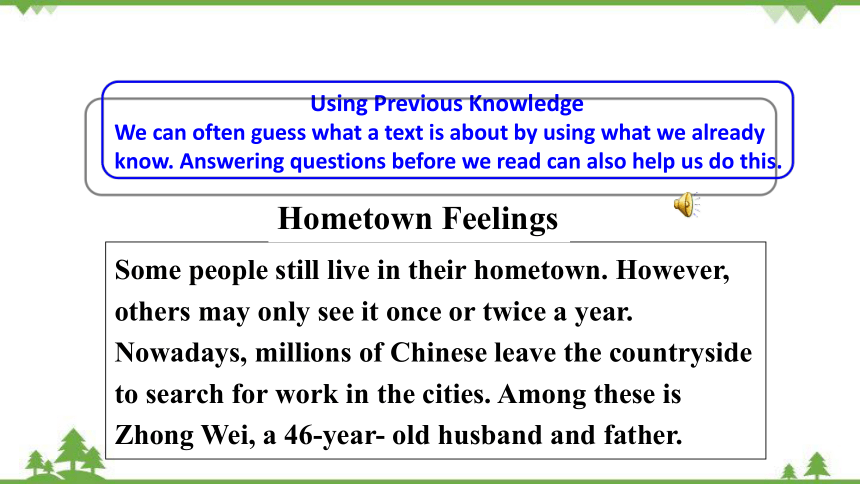
Using Previous Knowledge
We can often guess what a text is about by using what we already know. Answering questions before we read can also help us do this.
Some people still live in their hometown. However, others may only see it once or twice a year. Nowadays, millions of Chinese leave the countryside to search for work in the cities. Among these is Zhong Wei, a 46-year- old husband and father.
Hometown Feelings
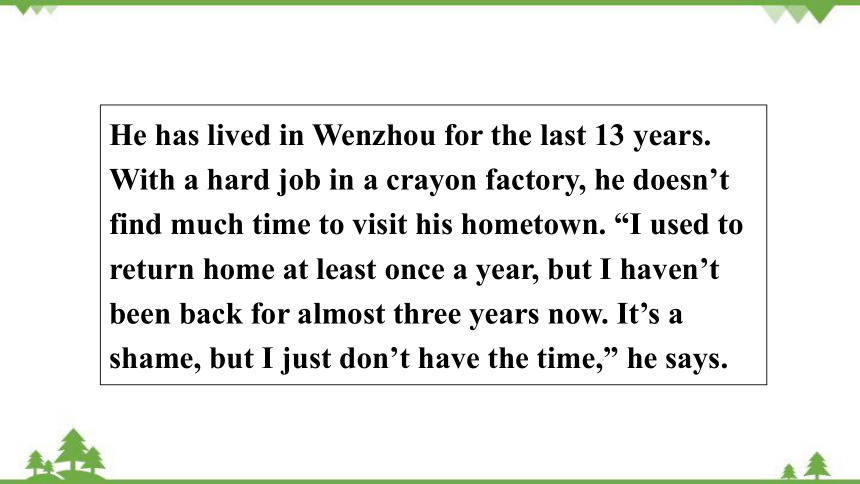
He has lived in Wenzhou for the last 13 years. With a hard job in a crayon factory, he doesn’t find much time to visit his hometown. “I used to return home at least once a year, but I haven’t been back for almost three years now. It’s a shame, but I just don’t have the time,” he says.
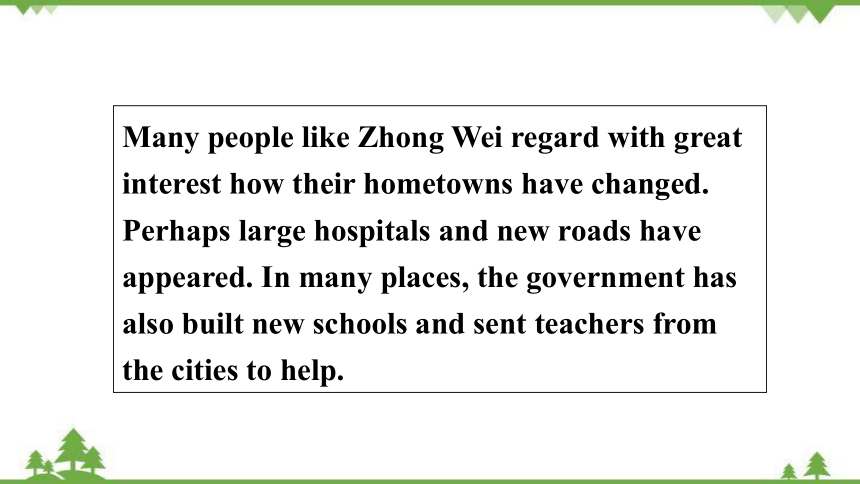
Many people like Zhong Wei regard with great interest how their hometowns have changed.
Perhaps large hospitals and new roads have appeared. In many places, the government has also built new schools and sent teachers from the cities to help.
“I noticed that’s true of my hometown,” adds Zhong Wei. “Children have learned to read and count at my old primary school since the mid-20th century. But now the buildings are
really old. I hear they’re going to build a new school there.” Zhong Wei thinks such developments are good, and he also knows that his hometown cannot always stay the same.
According to Zhong Wei, however, some things will never change. “In my hometown, there was a big old tree opposite the school. It is still there and has become quite a symbol of the place. Most of the children in my time liked to play together under that big tree, especially during the summer holidays. It was such a happy childhood. Our hometown has left many soft and sweet memories in our hearts.”
Find expressions in the passage that have the same meanings as these words and phrases.
1. look for _________
2. consider _________
3. across from __________
4. in one’s opinion _______________
5. go back _______
6. changes _____________
7. area _____________
search
regard
opposite
according to sb.
return
developments
place
2b
Complete the summary with words from the passage. You may need to change the forms of the words.
Many Chinese people these days leave their __________ to work in the ________. They usually ____________ to their hometowns one or two times a ______. Zhong Wei hasn’t been back in close to three years. He has been working in a _________
factory in Wenzhou for the past 13 years.
hometowns
cities
return
year
crayon
2c
People like him are ___________ in how their hometowns are changing. New buildings are often built by the ___________. Zhong Wei thinks these changes are _______because things need to change in order to become better. But he also thinks some things __________ change, and his hometown is still the place that holds all his childhood ___________.
interested
government
good
will never
memories
Think of changes that are happening in your town or city today. Which changes are generally good Which changes could be seen as bad
2d
search作不及物动词时,意为“搜索;搜查”。
search for意为“搜寻,找寻”。
e.g. He is searching for his sunglasses.
他正在找他的太阳镜。
【拓展】作及物动词,意为“在······搜查”或“搜查”。
e.g. They searched the forest for the lost child.
他们在森林里寻找那个走失的小孩。
1. Nowadays, millions of Chinese leave the countryside to search for work in the cities.
Language points
among prep. 在三者或三者以上之间
e.g. Tom sits among the students.
汤姆坐在学生之间。
between prep. 在两者之间
e.g. Tom sits between Mary and Frank.
汤姆坐在玛丽和弗兰克之间。
among与between
2. Among these is Zhang Wei, a 46-year-old
husband and father.
a 46-year-old husband and father意为“一位46岁的丈夫和父亲”,46-year-old是一个复合形容词,特点“一是数词、名词、形容词之间要用连字符连接,二是数词后的名词用单数形式”。e.g.
Tom is a 10-year-old boy. = Tom is a boy of 10 years old.
汤姆是一个10岁的男孩。
Lily is an 8-year-old girl.
莉莉是一个8岁的女孩。
【拓展】
另一种类似的复合形容词作定语的结构是:
数词+连字符+名词,或数词+名词的所有格。
e.g. a two-month holiday = a two months’
holiday 一个为期两个月的假期。
ten-minute walk/drive/ride =
ten minutes’ walk/drive/ride
步行/开车/骑车10分钟的路程
shame不可数名词,意为“羞耻;羞愧;惭愧” 。
e.g. It’s a shame (that) you can’t stay for dinner.
你不能留下来吃晚饭,真遗憾。
【拓展】相关短语:
to one’s shame “令人感到羞愧的是”
feel shame at … “因······而感到羞愧”
in shame “羞愧的”
have no shame “无羞耻心”
3. …It’s a shame, but I just don’t have the time,…
regard及物动词,意为“将······认为;把······视为”。
常用短语regard…as…意为“将······视为······;把······当做······” ,as为介词,其后接名词或代词。
e.g. I regard you as my best friend.
我把你当做我最好的朋友。
We regard him as our brother.
我们把他当成兄弟看待。
4. Many people like Zhong Wei regard with great interest how their hometowns have changed.
century,可数名词,意为“世纪;百年”,
其复数形式为centuries。
e.g. the mid-20th century 20世纪中期
an eighteenth-century writer
一名18世纪的作家
A hundred years is a century.
一百年是一个世纪。
5. Children have learned to read and count at my old primary school since the mid-20th century.
according to意为“依照,按照”,to为介词,
后接名词、代词或从句。
e.g.
He divided them into three groups according to age.
他把他们按年龄分成三组。
6. According to Zhong Wei, however, some things will never change.
7. consider动词,意为“考虑”,=think about,后跟名词、代词、动名词、宾语从句或“疑问词+不定式”。
e.g. Please consider my suggestion.
请考虑我的建议。
I am considering changing my job.
我正在考虑换份工作。
He has never considered how to solve that problem.
他从未考虑过如何解决那个问题。
【拓展】
在与动词连用时,只能用动名词形式的动词或短语有:
consider 考虑 enjoy 喜爱 practice 练习
keep (on) 继续(一直) mind 介意
finish 完成 have fun 高兴 feel like 想要
look forward to 盼望
can’t help 禁不住 give up 放弃
歌诀:喜欢错过别介意,
完成愉快勤练习,
禁不住考虑想放弃
单项选择。
1. I don’t believe that this ___ boy can paint such a nice picture.
A. five year olds B. five-years-old
C. five-year-old
2. According ____ Mr. Wang, we’ll go on a trip this weekend.
A. in B. to C. at D. for
Exercises
3. Look! She’s standing ___ the ten children.
A. among B. between C. of D. from
4. — Jackie Chan has donated ______ dollars
to the charity.
— He is an example to us all.
A. thousand B. thousands
C. thousand of D. thousands of
5. --Can you give me some information about
vacation trips
-- Why not ___ going to Hainan Island
A. consider B. mind C. keep D. think
6. --Did you go to Kenli during the Peach
Blossom Festival (桃花节)
--Yes. The flowers were beautiful. Bees were
flying ___them.
A. in B. among C. between D. through
7. Nowadays millions of Chinese leave the countryside to _____ for the work in cities.
A. looked B. search C. find D. see
8. Mr. Jack _____ China for several years.
A. has been to B. has come to
C. has been in D. came to
(2019 安徽)
—It's ten years since we came here.
—How time flies! We ____ in China for so long.
A. work B. worked
C. will work D. have worked
U10 SA 1a-1c
中考链接
D
【答案】D
【解析】句意:—我们来这里已经十年了。
—时光飞逝!我们在中国工作这么久了。
根据句意及时间状语for so long可知此处应
用现在完成时,故选D。
Discuss with your partners to share
what changes your hometown has had
these years. And tell why these
changes have taken place.
Homework
Unit 10
I’ve had this bike for three years.
人教版八年级英语下册
Section B 2a-2d
Objectives
To learn about Hometown Feelings
and understand the main idea of the
passage.
To learn new words: nowadays,
search, among, shame, regard, count,
opposite,especially, consider, hold …
Many Chinese leave their hometown to the cities.
Warming up
Why do they leave their hometown
Why do parents leave hometown every year
To search for work.
look for
What new buildings does the government
usually build in towns and villages
delicious food
good/terrible weather
beautiful scenery
sweet memories
high/a lot of hills
heavy traffic
busy/clean street
tall/old/new buildings
friendly people
…
Hometown feelings
1. Why do millions of Chinese leave the
countryside every year
Answer the questions before you read. Then read the passage to find out if your answers are the same as in the passage.
Millions of Chinese leave the countryside to search for work in the cities.
2a
2. How often do you think these people visit
their hometowns
3. What new buildings does the government
usually build in towns and villages
They may only visit their hometowns once or twice a year. Some people even have no time to return home.
Large hospitals, new roads, new schools, parks and so on.
Using Previous Knowledge
We can often guess what a text is about by using what we already know. Answering questions before we read can also help us do this.
Some people still live in their hometown. However, others may only see it once or twice a year. Nowadays, millions of Chinese leave the countryside to search for work in the cities. Among these is Zhong Wei, a 46-year- old husband and father.
Hometown Feelings
He has lived in Wenzhou for the last 13 years. With a hard job in a crayon factory, he doesn’t find much time to visit his hometown. “I used to return home at least once a year, but I haven’t been back for almost three years now. It’s a shame, but I just don’t have the time,” he says.
Many people like Zhong Wei regard with great interest how their hometowns have changed.
Perhaps large hospitals and new roads have appeared. In many places, the government has also built new schools and sent teachers from the cities to help.
“I noticed that’s true of my hometown,” adds Zhong Wei. “Children have learned to read and count at my old primary school since the mid-20th century. But now the buildings are
really old. I hear they’re going to build a new school there.” Zhong Wei thinks such developments are good, and he also knows that his hometown cannot always stay the same.
According to Zhong Wei, however, some things will never change. “In my hometown, there was a big old tree opposite the school. It is still there and has become quite a symbol of the place. Most of the children in my time liked to play together under that big tree, especially during the summer holidays. It was such a happy childhood. Our hometown has left many soft and sweet memories in our hearts.”
Find expressions in the passage that have the same meanings as these words and phrases.
1. look for _________
2. consider _________
3. across from __________
4. in one’s opinion _______________
5. go back _______
6. changes _____________
7. area _____________
search
regard
opposite
according to sb.
return
developments
place
2b
Complete the summary with words from the passage. You may need to change the forms of the words.
Many Chinese people these days leave their __________ to work in the ________. They usually ____________ to their hometowns one or two times a ______. Zhong Wei hasn’t been back in close to three years. He has been working in a _________
factory in Wenzhou for the past 13 years.
hometowns
cities
return
year
crayon
2c
People like him are ___________ in how their hometowns are changing. New buildings are often built by the ___________. Zhong Wei thinks these changes are _______because things need to change in order to become better. But he also thinks some things __________ change, and his hometown is still the place that holds all his childhood ___________.
interested
government
good
will never
memories
Think of changes that are happening in your town or city today. Which changes are generally good Which changes could be seen as bad
2d
search作不及物动词时,意为“搜索;搜查”。
search for意为“搜寻,找寻”。
e.g. He is searching for his sunglasses.
他正在找他的太阳镜。
【拓展】作及物动词,意为“在······搜查”或“搜查”。
e.g. They searched the forest for the lost child.
他们在森林里寻找那个走失的小孩。
1. Nowadays, millions of Chinese leave the countryside to search for work in the cities.
Language points
among prep. 在三者或三者以上之间
e.g. Tom sits among the students.
汤姆坐在学生之间。
between prep. 在两者之间
e.g. Tom sits between Mary and Frank.
汤姆坐在玛丽和弗兰克之间。
among与between
2. Among these is Zhang Wei, a 46-year-old
husband and father.
a 46-year-old husband and father意为“一位46岁的丈夫和父亲”,46-year-old是一个复合形容词,特点“一是数词、名词、形容词之间要用连字符连接,二是数词后的名词用单数形式”。e.g.
Tom is a 10-year-old boy. = Tom is a boy of 10 years old.
汤姆是一个10岁的男孩。
Lily is an 8-year-old girl.
莉莉是一个8岁的女孩。
【拓展】
另一种类似的复合形容词作定语的结构是:
数词+连字符+名词,或数词+名词的所有格。
e.g. a two-month holiday = a two months’
holiday 一个为期两个月的假期。
ten-minute walk/drive/ride =
ten minutes’ walk/drive/ride
步行/开车/骑车10分钟的路程
shame不可数名词,意为“羞耻;羞愧;惭愧” 。
e.g. It’s a shame (that) you can’t stay for dinner.
你不能留下来吃晚饭,真遗憾。
【拓展】相关短语:
to one’s shame “令人感到羞愧的是”
feel shame at … “因······而感到羞愧”
in shame “羞愧的”
have no shame “无羞耻心”
3. …It’s a shame, but I just don’t have the time,…
regard及物动词,意为“将······认为;把······视为”。
常用短语regard…as…意为“将······视为······;把······当做······” ,as为介词,其后接名词或代词。
e.g. I regard you as my best friend.
我把你当做我最好的朋友。
We regard him as our brother.
我们把他当成兄弟看待。
4. Many people like Zhong Wei regard with great interest how their hometowns have changed.
century,可数名词,意为“世纪;百年”,
其复数形式为centuries。
e.g. the mid-20th century 20世纪中期
an eighteenth-century writer
一名18世纪的作家
A hundred years is a century.
一百年是一个世纪。
5. Children have learned to read and count at my old primary school since the mid-20th century.
according to意为“依照,按照”,to为介词,
后接名词、代词或从句。
e.g.
He divided them into three groups according to age.
他把他们按年龄分成三组。
6. According to Zhong Wei, however, some things will never change.
7. consider动词,意为“考虑”,=think about,后跟名词、代词、动名词、宾语从句或“疑问词+不定式”。
e.g. Please consider my suggestion.
请考虑我的建议。
I am considering changing my job.
我正在考虑换份工作。
He has never considered how to solve that problem.
他从未考虑过如何解决那个问题。
【拓展】
在与动词连用时,只能用动名词形式的动词或短语有:
consider 考虑 enjoy 喜爱 practice 练习
keep (on) 继续(一直) mind 介意
finish 完成 have fun 高兴 feel like 想要
look forward to 盼望
can’t help 禁不住 give up 放弃
歌诀:喜欢错过别介意,
完成愉快勤练习,
禁不住考虑想放弃
单项选择。
1. I don’t believe that this ___ boy can paint such a nice picture.
A. five year olds B. five-years-old
C. five-year-old
2. According ____ Mr. Wang, we’ll go on a trip this weekend.
A. in B. to C. at D. for
Exercises
3. Look! She’s standing ___ the ten children.
A. among B. between C. of D. from
4. — Jackie Chan has donated ______ dollars
to the charity.
— He is an example to us all.
A. thousand B. thousands
C. thousand of D. thousands of
5. --Can you give me some information about
vacation trips
-- Why not ___ going to Hainan Island
A. consider B. mind C. keep D. think
6. --Did you go to Kenli during the Peach
Blossom Festival (桃花节)
--Yes. The flowers were beautiful. Bees were
flying ___them.
A. in B. among C. between D. through
7. Nowadays millions of Chinese leave the countryside to _____ for the work in cities.
A. looked B. search C. find D. see
8. Mr. Jack _____ China for several years.
A. has been to B. has come to
C. has been in D. came to
(2019 安徽)
—It's ten years since we came here.
—How time flies! We ____ in China for so long.
A. work B. worked
C. will work D. have worked
U10 SA 1a-1c
中考链接
D
【答案】D
【解析】句意:—我们来这里已经十年了。
—时光飞逝!我们在中国工作这么久了。
根据句意及时间状语for so long可知此处应
用现在完成时,故选D。
Discuss with your partners to share
what changes your hometown has had
these years. And tell why these
changes have taken place.
Homework
同课章节目录
- Unit 1 What's the matter?
- Section A
- Section B
- Unit 2 I'll help to clean up the city parks.
- Section A
- Section B
- Unit 3 Could you please clean your room?
- Section A
- Section B
- Unit 4 Why don't you talk to your parents?
- Section A
- Section B
- Unit 5 What were you doing when the rainstorm came
- Section A
- Section B
- Review of Units 1-5
- Unit 6 An old man tried to move the mountains.
- Section A
- Section B
- Unit 7 What's the highest mountain in the world?
- Section A
- Section B
- Unit 8 Have you read Treasure Island yet?
- Section A
- Section B
- Unit 9 Have you ever been to a museum?
- Section A
- Section B
- Unit 10 I've had this bike for three years.
- Section A
- Section B