
Unit 5 Where did you go on vacation1 教案(表格式)
文档属性
| 名称 | Unit 5 Where did you go on vacation1 教案(表格式) |
|
|
| 格式 | doc | ||
| 文件大小 | 38.0KB | ||
| 资源类型 | 教案 | ||
| 版本资源 | 鲁教版 | ||
| 科目 | 英语 | ||
| 更新时间 | 2022-09-14 00:00:00 | ||
文档简介
教 学 设 计
备课时间: 10.9 授课时间:10.17
课题 U5 Where did you go on vacation 第 1 课时 课型 New
教材分析 Master the past forms of the regular and irregular verbs. Learn to talk about recent past events.
教学目标 Teaching aims: 1. Learn the new vocabulary words: 2. Target language: Where did you go on vacation We went to summer camp. Where did they go on vacation They visited the museum. Did you/he/she/they go to Central Park Yes, I/he/she/they did. No, I/he/she/they didn’t.
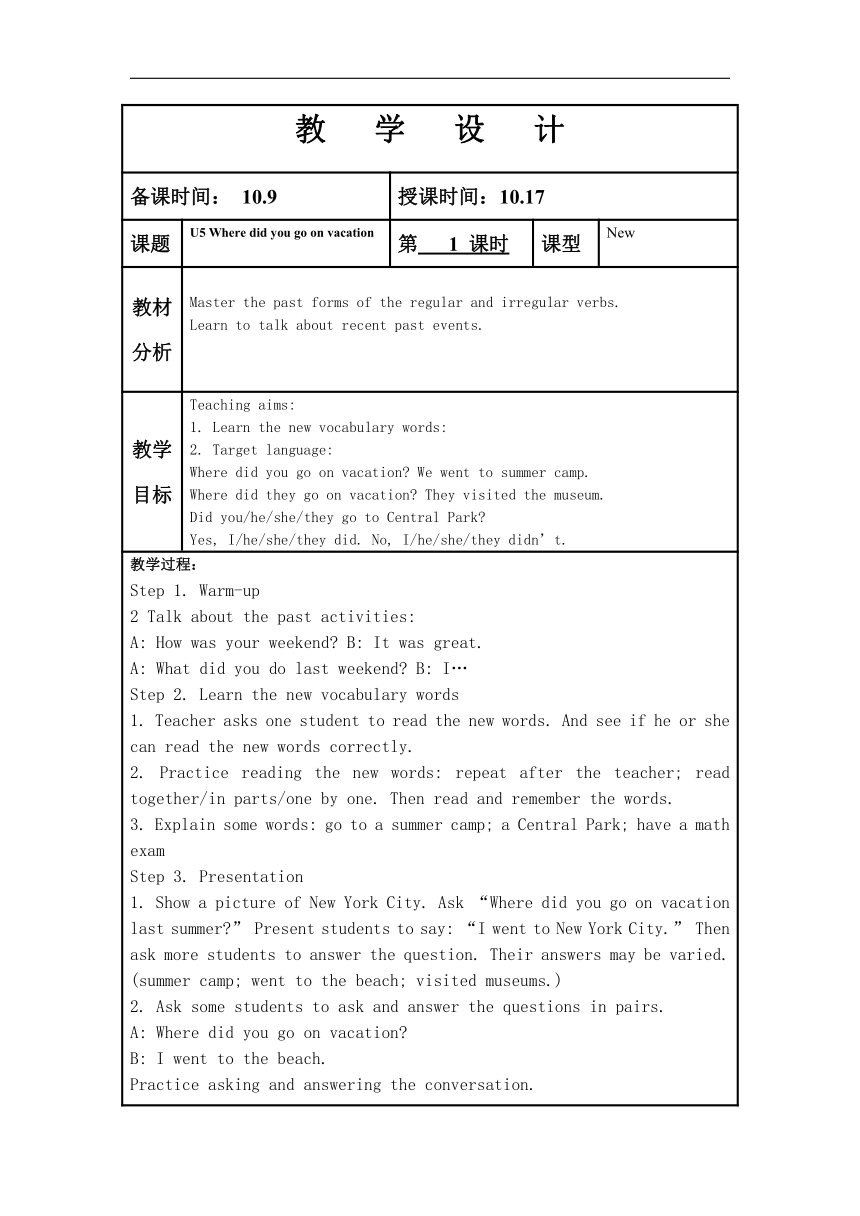
教学过程:Step 1. Warm-up2 Talk about the past activities: A: How was your weekend B: It was great. A: What did you do last weekend B: I… Step 2. Learn the new vocabulary words 1. Teacher asks one student to read the new words. And see if he or she can read the new words correctly. 2. Practice reading the new words: repeat after the teacher; read together/in parts/one by one. Then read and remember the words. 3. Explain some words: go to a summer camp; a Central Park; have a math exam Step 3. Presentation 1. Show a picture of New York City. Ask “Where did you go on vacation last summer ” Present students to say: “I went to New York City.” Then ask more students to answer the question. Their answers may be varied. (summer camp; went to the beach; visited museums.) 2. Ask some students to ask and answer the questions in pairs. A: Where did you go on vacation B: I went to the beach. Practice asking and answering the conversation. Step 4. 1a Look and match 1. The teacher reads the instructions to the students. 2. Students read the activities in the box first. Teacher can get one student to explain them in Chinese. Then get students to complete by themselves.Check up the answers. Step 5. 1b Listening practice 1.The teacher reads the instructions to the students. 2. Get the students to read the names in the box after teacher. 3. Tell students to look at the pictures and say what the person did in each picture. For example: She went to the mountains. 4. Tell students they will hear three conversations. People talk about what they did on vacations. Then play the recording. Students listen the first time. Students only listen. 5. Play the recording again and try to fill in the blanks with the numbers. 6. Check up the answers.Play the recording, let the students repeat after the recording. Then practice reading the conversation. Step 6. 1cPair work 1. The teacher explains the instructions to the students. 2. The students practice reading the conversation below inactivity1c. 3. Make their own conversations with the activities in activity 1a. Ask “Where did Brad/Sally/Tom go on vacation ”Then work it in class. Step 7. 2a Listening practice 1. Get students to read the names and the activities in the box. Tell students: they will hear three conversations about three people’s vacations. Match the people with the activities. 2. Play the recording the first time, students only listen. 3. Replay the recording and try to match. 4. Check up the answers. Step 8. 2b Listening practice 1. Students look at the chart and read the names and the activities. Say, listen to the conversations and check “Yes, I did.” Or “No, I didn’t.” 2. Play the recording the first time. Students only listen. 3. Play the recording again. Students try to fill the blanks. 4. Check up the answers. 5. Get the students to repeat after the recording. Step 9. 2cGroup work 1. The teacher explains the instructions to the students. Students read the example in the speech bubbles. 2. Work in groups to role play the conversation. You can talk about the activities from the chart in 2b or other activities. The teacher move around and give help if students need. 3.Ask one or two groups to work in class. Step 10.Grammar focus The students read the sentences. And find if there are some questions. If have, explain them. Step 11. Summary 1. The new vocabulary words. 2. The new target language. Step 12.Homework 1. 必做:Revise the vocabulary words. 2. 选做:Make a conversation about your last vacation.
课后反思:
备课时间: 10.9 授课时间:10.17
课题 U5 Where did you go on vacation 第 1 课时 课型 New
教材分析 Master the past forms of the regular and irregular verbs. Learn to talk about recent past events.
教学目标 Teaching aims: 1. Learn the new vocabulary words: 2. Target language: Where did you go on vacation We went to summer camp. Where did they go on vacation They visited the museum. Did you/he/she/they go to Central Park Yes, I/he/she/they did. No, I/he/she/they didn’t.
教学过程:Step 1. Warm-up2 Talk about the past activities: A: How was your weekend B: It was great. A: What did you do last weekend B: I… Step 2. Learn the new vocabulary words 1. Teacher asks one student to read the new words. And see if he or she can read the new words correctly. 2. Practice reading the new words: repeat after the teacher; read together/in parts/one by one. Then read and remember the words. 3. Explain some words: go to a summer camp; a Central Park; have a math exam Step 3. Presentation 1. Show a picture of New York City. Ask “Where did you go on vacation last summer ” Present students to say: “I went to New York City.” Then ask more students to answer the question. Their answers may be varied. (summer camp; went to the beach; visited museums.) 2. Ask some students to ask and answer the questions in pairs. A: Where did you go on vacation B: I went to the beach. Practice asking and answering the conversation. Step 4. 1a Look and match 1. The teacher reads the instructions to the students. 2. Students read the activities in the box first. Teacher can get one student to explain them in Chinese. Then get students to complete by themselves.Check up the answers. Step 5. 1b Listening practice 1.The teacher reads the instructions to the students. 2. Get the students to read the names in the box after teacher. 3. Tell students to look at the pictures and say what the person did in each picture. For example: She went to the mountains. 4. Tell students they will hear three conversations. People talk about what they did on vacations. Then play the recording. Students listen the first time. Students only listen. 5. Play the recording again and try to fill in the blanks with the numbers. 6. Check up the answers.Play the recording, let the students repeat after the recording. Then practice reading the conversation. Step 6. 1cPair work 1. The teacher explains the instructions to the students. 2. The students practice reading the conversation below inactivity1c. 3. Make their own conversations with the activities in activity 1a. Ask “Where did Brad/Sally/Tom go on vacation ”Then work it in class. Step 7. 2a Listening practice 1. Get students to read the names and the activities in the box. Tell students: they will hear three conversations about three people’s vacations. Match the people with the activities. 2. Play the recording the first time, students only listen. 3. Replay the recording and try to match. 4. Check up the answers. Step 8. 2b Listening practice 1. Students look at the chart and read the names and the activities. Say, listen to the conversations and check “Yes, I did.” Or “No, I didn’t.” 2. Play the recording the first time. Students only listen. 3. Play the recording again. Students try to fill the blanks. 4. Check up the answers. 5. Get the students to repeat after the recording. Step 9. 2cGroup work 1. The teacher explains the instructions to the students. Students read the example in the speech bubbles. 2. Work in groups to role play the conversation. You can talk about the activities from the chart in 2b or other activities. The teacher move around and give help if students need. 3.Ask one or two groups to work in class. Step 10.Grammar focus The students read the sentences. And find if there are some questions. If have, explain them. Step 11. Summary 1. The new vocabulary words. 2. The new target language. Step 12.Homework 1. 必做:Revise the vocabulary words. 2. 选做:Make a conversation about your last vacation.
课后反思:
常见问题
这份教案适用于什么教材版本?
本教案适用于鲁教版相关教学场景,可在21世纪教育网检索同版本配套资源。
适用学段和科目是什么?
适用学段与科目:初中、0、英语。
文件是什么格式,大小多少?
文件格式为 DOC,文件大小约 38.0KB。
文档主要包含哪些内容?
教 学 设 计备课时间: 10.9 授课时间:10.17课题 U5 Where did you go on vacation 第 1 课时 课型 New教材分析 Master the past forms of the re…
如何获取完整文档?
页面提供 1 页预览图片,完整文档可通过21世纪教育网下载页 /t/13288401 获取。