
Unit 11 Sad movies make me cry.Section A 单词讲解课件 (共19张PPT)
文档属性
| 名称 | Unit 11 Sad movies make me cry.Section A 单词讲解课件 (共19张PPT) |
|
|
| 格式 | pptx | ||
| 文件大小 | 554.1KB | ||
| 资源类型 | 教案 | ||
| 版本资源 | 人教新目标(Go for it)版 | ||
| 科目 | 英语 | ||
| 更新时间 | 2022-12-06 00:00:00 | ||
图片预览
文档简介
(共19张PPT)
Unit 11 Sad movies make me cry.
Section A 单词讲解
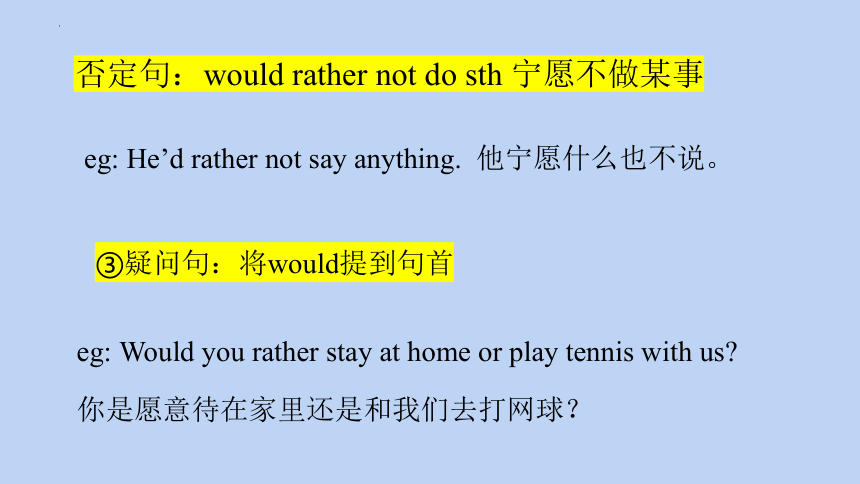
1. rather adv. 相当,相反
would rather 宁愿
would rather意为"宁愿;宁可;更喜欢",后跟动词原形,常用来表示选择的意愿。没有人称和数的变化,其中would常缩写成’d形式,(缩写 ’d rather)。
①肯定句:would rather do sth =prefer to do sth
eg: I would rather stay at home because it’s cold outside.
我宁愿待在家里,因为外面很冷。
拓展:
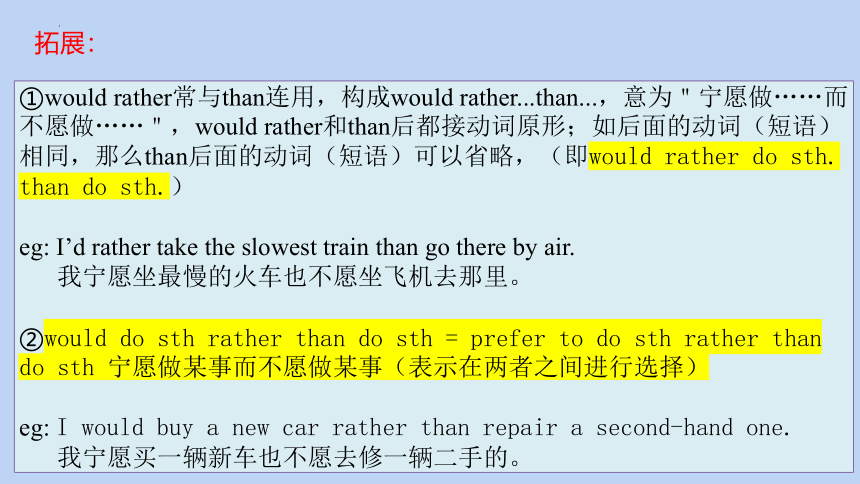
否定句:would rather not do sth 宁愿不做某事
eg: He’d rather not say anything. 他宁愿什么也不说。
③疑问句:将would提到句首
eg: Would you rather stay at home or play tennis with us
你是愿意待在家里还是和我们去打网球?
①would rather常与than连用,构成would rather...than...,意为"宁愿做……而不愿做……",would rather和than后都接动词原形;如后面的动词(短语)相同,那么than后面的动词(短语)可以省略,(即would rather do sth. than do sth.)
eg: I’d rather take the slowest train than go there by air.
我宁愿坐最慢的火车也不愿坐飞机去那里。
②would do sth rather than do sth = prefer to do sth rather than do sth 宁愿做某事而不愿做某事(表示在两者之间进行选择)
eg: I would buy a new car rather than repair a second-hand one.
我宁愿买一辆新车也不愿去修一辆二手的。
拓展:
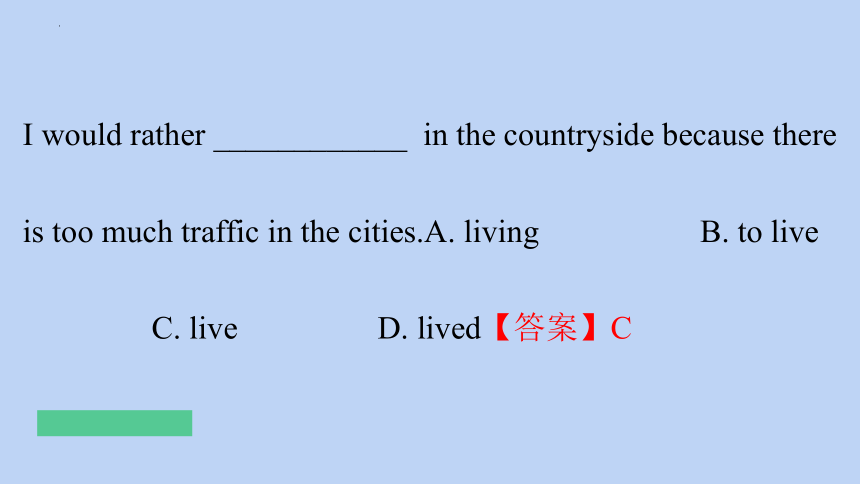
I would rather ____________ in the countryside because there is too much traffic in the cities.A. living B. to live C. live D. lived【答案】C
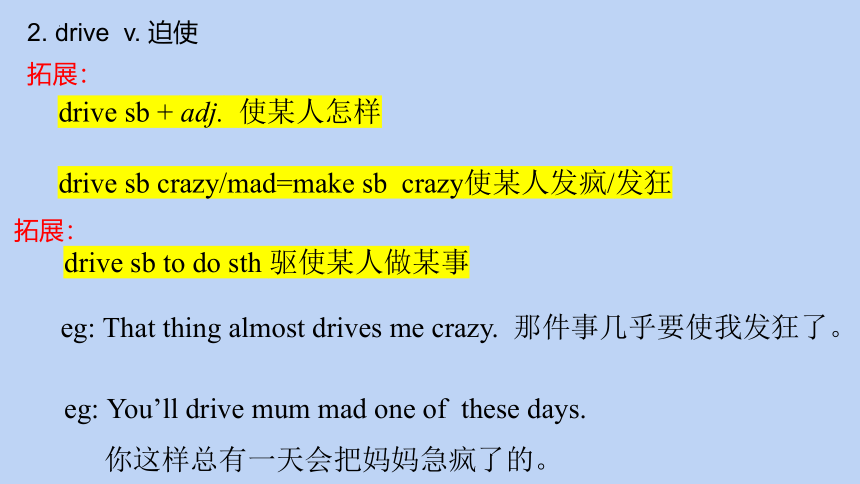
2. drive v. 迫使
drive sb + adj. 使某人怎样
drive sb crazy/mad=make sb crazy使某人发疯/发狂
drive sb to do sth 驱使某人做某事
eg: That thing almost drives me crazy. 那件事几乎要使我发狂了。
eg: You’ll drive mum mad one of these days.
你这样总有一天会把妈妈急疯了的。
拓展:
拓展:
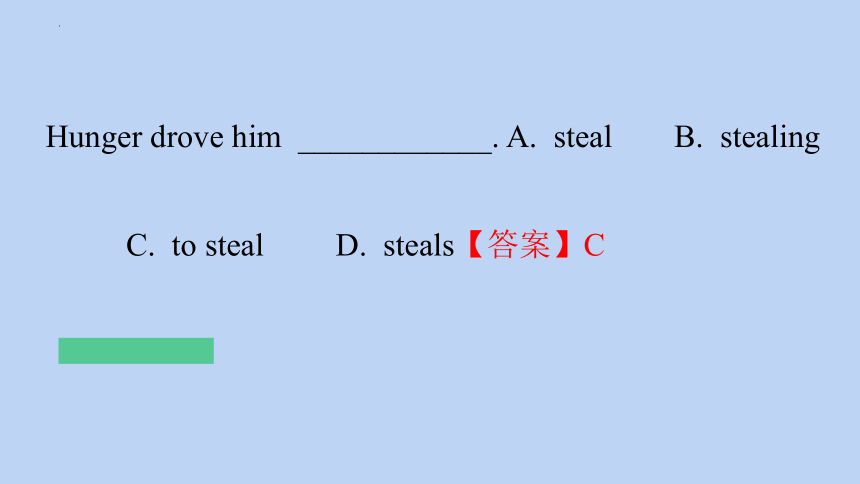
Hunger drove him ____________. A. steal B. stealing C. to steal D. steals【答案】C
3. the more...the more... 越......越.......
"The+形容词或副词比较级(+句子),the+形容词或副词比较级(+句子)"意为"越……越……",表示一方的程度随着另一方的变化而变化,其中的两个the都是副词,而不是冠词。
"比较级+and +比较级"意为"越来越……"。
eg: The harder you work, the greater progress you will make.
你越用功,进步就越大。
eg: Our hometown is becoming more and more beautiful.
我们的家乡变得越来越漂亮了。
拓展:
After the rebuilding our school is becoming ____________.A. more and more beautiful B. more beautiful and beautifulC. beautiful and beautiful D. the more beautiful【答案】A
6. leave out 忽略,不提及,不包括
to be/feel left out 表示"被遗忘;被忽略;不提及"之类的意思。
eg: No one speaks to him, he always feels left out.
没人跟他讲话,他总是觉得被人冷落。
"leave sth +地点状语",意为"把某物遗忘在某地"。
eg: I left my homework at home. 我把作业忘在了家里。
5. be friends with sb. 成为某人的朋友
4. lately adv. 最近,不久前
拓展:
“动词+out” 构成的短语:
look out 当心,小心
sell out 卖光
set out 出发,启程
hand out 分发,散发
give out 发出,分发
take out 取出,拿出
find out 弄清,查明
work out 算出,解决
bring out 使显现
check out (经检查)得到证实,结账离开
拓展:
I think you should communicate more with Bill. Then he won’t feel ____________.A. leave out B. happy C. left out D. excited【答案】C
7. friendship n. 友谊,友情
make our friendship sronger 使我们的友谊更坚固
8. king n.国王
an unhappy king 一个不开心的国王
9. minister n. 大臣,部长
9. power n. 权力,力量
adj. powerful
prime minister 首相,大臣
拓展:
拓展:
11. banker n. 银行家
12. fame n. 名誉,声誉
13. pale adj. 苍白的,灰白的
(as)pale as chalk 像粉笔一样苍白
14. queen n.王后,女王
15. call in 召来,叫来
16. examine v. (仔细地)检查,检验
n. examination 考试,审查
拓展:
17. nor conj & adv 也不
neither...nor意为"既不……也不……",谓语动词遵循就近原则,跟最近的主语保持一致。
eg: Neither he nor I am from Beijing. 他和我都不是来自北京。
both/ either/ neither
①neither表示"两者都不",作主语时,谓语动词常用单数形式。
eg: Neither of his parents is a doctor. 他的父母都不是医生。
②both表示"两者都",作主语时,谓语动词用复数形式。
eg: Both of his parents are doctors. 他的父母都是医生。
③either表示"两者中的任何一个",作主语时,谓语动词常用单数形式。
eg: Either of his parents is a doctor. 他的父母中有一个是医生。
拓展:
拓展:
both...and...连接主语时,谓语动词用复数形式;
either...or...与neither...nor...连接主语时,谓语动词常与离它最近的主语在人称和数上保持一致。
eg: Both of the twin girls are polite.那两个双胞胎女孩都有礼貌。
eg: Neither of her brothers likes junk food.她的两个哥哥都不喜欢垃圾食品。eg: Either he or I am going to the meeting.他或者我准备去参加会议。
His daughter likes ____________ music ____________ art. She likes sports instead. A. both;and B. either;or C. not only;but also D. neither;nor【答案】D
拓展:
18. palace n. 王宫,宫殿
19. wealth n. 财富,(当财富时是不可数名词)
adj. wealthy 富有的
20. to start with 起初,开始时
to start with意思是"起初;开始时",相当于to begin with。
eg: To start/begin with, I want to thank my parents and friends who helped me a lot. 首先,我要感谢我的父母和朋友们,他们给了我许多帮助。
拓展:
21. grey adj. 阴沉的,昏暗的
22. lemon n. 柠檬
23. uncomfortable adj. 使人不舒服的,令人不舒适的
反义词: comfortable adj. 舒服的,舒适的
Thank you !
Unit 11 Sad movies make me cry.
Section A 单词讲解
1. rather adv. 相当,相反
would rather 宁愿
would rather意为"宁愿;宁可;更喜欢",后跟动词原形,常用来表示选择的意愿。没有人称和数的变化,其中would常缩写成’d形式,(缩写 ’d rather)。
①肯定句:would rather do sth =prefer to do sth
eg: I would rather stay at home because it’s cold outside.
我宁愿待在家里,因为外面很冷。
拓展:
否定句:would rather not do sth 宁愿不做某事
eg: He’d rather not say anything. 他宁愿什么也不说。
③疑问句:将would提到句首
eg: Would you rather stay at home or play tennis with us
你是愿意待在家里还是和我们去打网球?
①would rather常与than连用,构成would rather...than...,意为"宁愿做……而不愿做……",would rather和than后都接动词原形;如后面的动词(短语)相同,那么than后面的动词(短语)可以省略,(即would rather do sth. than do sth.)
eg: I’d rather take the slowest train than go there by air.
我宁愿坐最慢的火车也不愿坐飞机去那里。
②would do sth rather than do sth = prefer to do sth rather than do sth 宁愿做某事而不愿做某事(表示在两者之间进行选择)
eg: I would buy a new car rather than repair a second-hand one.
我宁愿买一辆新车也不愿去修一辆二手的。
拓展:
I would rather ____________ in the countryside because there is too much traffic in the cities.A. living B. to live C. live D. lived【答案】C
2. drive v. 迫使
drive sb + adj. 使某人怎样
drive sb crazy/mad=make sb crazy使某人发疯/发狂
drive sb to do sth 驱使某人做某事
eg: That thing almost drives me crazy. 那件事几乎要使我发狂了。
eg: You’ll drive mum mad one of these days.
你这样总有一天会把妈妈急疯了的。
拓展:
拓展:
Hunger drove him ____________. A. steal B. stealing C. to steal D. steals【答案】C
3. the more...the more... 越......越.......
"The+形容词或副词比较级(+句子),the+形容词或副词比较级(+句子)"意为"越……越……",表示一方的程度随着另一方的变化而变化,其中的两个the都是副词,而不是冠词。
"比较级+and +比较级"意为"越来越……"。
eg: The harder you work, the greater progress you will make.
你越用功,进步就越大。
eg: Our hometown is becoming more and more beautiful.
我们的家乡变得越来越漂亮了。
拓展:
After the rebuilding our school is becoming ____________.A. more and more beautiful B. more beautiful and beautifulC. beautiful and beautiful D. the more beautiful【答案】A
6. leave out 忽略,不提及,不包括
to be/feel left out 表示"被遗忘;被忽略;不提及"之类的意思。
eg: No one speaks to him, he always feels left out.
没人跟他讲话,他总是觉得被人冷落。
"leave sth +地点状语",意为"把某物遗忘在某地"。
eg: I left my homework at home. 我把作业忘在了家里。
5. be friends with sb. 成为某人的朋友
4. lately adv. 最近,不久前
拓展:
“动词+out” 构成的短语:
look out 当心,小心
sell out 卖光
set out 出发,启程
hand out 分发,散发
give out 发出,分发
take out 取出,拿出
find out 弄清,查明
work out 算出,解决
bring out 使显现
check out (经检查)得到证实,结账离开
拓展:
I think you should communicate more with Bill. Then he won’t feel ____________.A. leave out B. happy C. left out D. excited【答案】C
7. friendship n. 友谊,友情
make our friendship sronger 使我们的友谊更坚固
8. king n.国王
an unhappy king 一个不开心的国王
9. minister n. 大臣,部长
9. power n. 权力,力量
adj. powerful
prime minister 首相,大臣
拓展:
拓展:
11. banker n. 银行家
12. fame n. 名誉,声誉
13. pale adj. 苍白的,灰白的
(as)pale as chalk 像粉笔一样苍白
14. queen n.王后,女王
15. call in 召来,叫来
16. examine v. (仔细地)检查,检验
n. examination 考试,审查
拓展:
17. nor conj & adv 也不
neither...nor意为"既不……也不……",谓语动词遵循就近原则,跟最近的主语保持一致。
eg: Neither he nor I am from Beijing. 他和我都不是来自北京。
both/ either/ neither
①neither表示"两者都不",作主语时,谓语动词常用单数形式。
eg: Neither of his parents is a doctor. 他的父母都不是医生。
②both表示"两者都",作主语时,谓语动词用复数形式。
eg: Both of his parents are doctors. 他的父母都是医生。
③either表示"两者中的任何一个",作主语时,谓语动词常用单数形式。
eg: Either of his parents is a doctor. 他的父母中有一个是医生。
拓展:
拓展:
both...and...连接主语时,谓语动词用复数形式;
either...or...与neither...nor...连接主语时,谓语动词常与离它最近的主语在人称和数上保持一致。
eg: Both of the twin girls are polite.那两个双胞胎女孩都有礼貌。
eg: Neither of her brothers likes junk food.她的两个哥哥都不喜欢垃圾食品。eg: Either he or I am going to the meeting.他或者我准备去参加会议。
His daughter likes ____________ music ____________ art. She likes sports instead. A. both;and B. either;or C. not only;but also D. neither;nor【答案】D
拓展:
18. palace n. 王宫,宫殿
19. wealth n. 财富,(当财富时是不可数名词)
adj. wealthy 富有的
20. to start with 起初,开始时
to start with意思是"起初;开始时",相当于to begin with。
eg: To start/begin with, I want to thank my parents and friends who helped me a lot. 首先,我要感谢我的父母和朋友们,他们给了我许多帮助。
拓展:
21. grey adj. 阴沉的,昏暗的
22. lemon n. 柠檬
23. uncomfortable adj. 使人不舒服的,令人不舒适的
反义词: comfortable adj. 舒服的,舒适的
Thank you !
同课章节目录
- Unit 1 How can we become good learners.
- Section A
- Section B
- Unit 2 I think that mooncakes are delicious!
- Section A
- Section B
- Unit 3 Could you please tell me where the restroom
- Section A
- Section B
- Unit 4 I used to be afraid of the dark.
- Section A
- Section B
- Unit 5 What are the shirts made of?
- Section A
- Section B
- Review of Units 1-5
- Unit 6 When was it invented?
- Section A
- Section B
- Unit 7 Teenagers should be allowed to choose their
- Section A
- Section B
- Unit 8 It must belong to Carla.
- Section A
- Section B
- Unit 9 I like music that I can dance to.
- Section A
- Section B
- Unit 10 You're supposed to shake hands.
- Section A
- Section B
- Review of Units 6-10
- Unit 11 Sad movies make me cry.
- Section A
- Section B
- Unit 12 Life is full of the unexpected
- Section A
- Section B
- Unit 13 We're trying to save the earth!
- Section A
- Section B
- Unit 14 I remember meeting all of you in Grade 7.
- Section A
- Section B
- Review of Units 11-14