
外研版 选修6 Module 3 Interpersonal Relationships -- Friendship 语法讲解:状语从句和状语的转换教案
文档属性
| 名称 | 外研版 选修6 Module 3 Interpersonal Relationships -- Friendship 语法讲解:状语从句和状语的转换教案 |
|
|
| 格式 | doc | ||
| 文件大小 | 17.5KB | ||
| 资源类型 | 教案 | ||
| 版本资源 | 外研版 | ||
| 科目 | 英语 | ||
| 更新时间 | 2023-02-18 00:00:00 | ||
文档简介
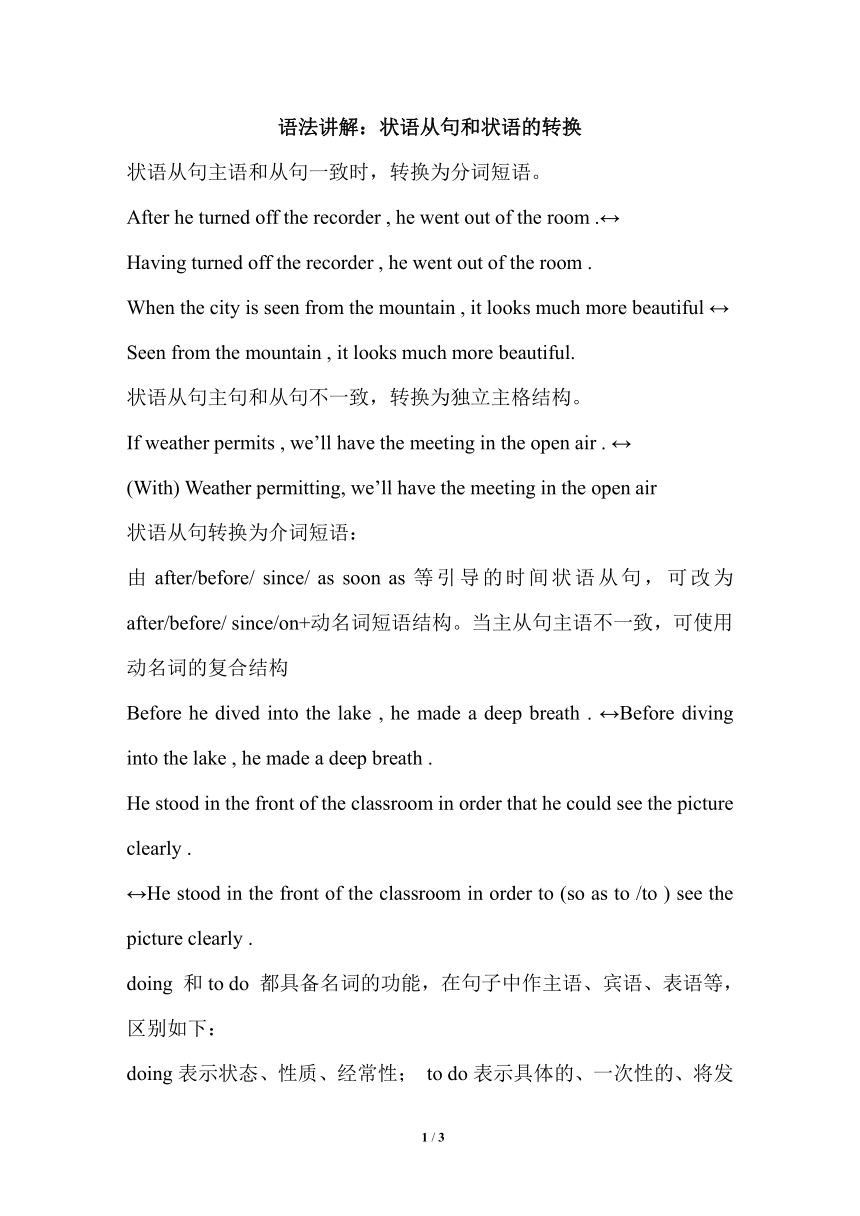
语法讲解:状语从句和状语的转换
状语从句主语和从句一致时,转换为分词短语。
After he turned off the recorder , he went out of the room .
Having turned off the recorder , he went out of the room .
When the city is seen from the mountain , it looks much more beautiful
Seen from the mountain , it looks much more beautiful.
状语从句主句和从句不一致,转换为独立主格结构。
If weather permits , we’ll have the meeting in the open air .
(With) Weather permitting, we’ll have the meeting in the open air
状语从句转换为介词短语:
由after/before/ since/ as soon as等引导的时间状语从句,可改为after/before/ since/on+动名词短语结构。当主从句主语不一致,可使用动名词的复合结构
Before he dived into the lake , he made a deep breath . Before diving into the lake , he made a deep breath .
He stood in the front of the classroom in order that he could see the picture clearly .
He stood in the front of the classroom in order to (so as to /to ) see the picture clearly .
doing 和to do 都具备名词的功能,在句子中作主语、宾语、表语等,区别如下:
doing表示状态、性质、经常性; to do表示具体的、一次性的、将发生的动作。
以下动词后,只能跟不定式做宾语:
agree, ask, aim, arrange, choose,
decide, demand, expect, fail, help,
learn, long, manage, offer, plan,
prepare, pretend, promise, refuse, wish
以下动词后,只能跟-ing做宾语:
admit, appreciate, consider, delay,
enjoy, finish, keep, imagine, mind,
miss, practice, resist, risk, save,
suggest, don't mind, give up,
insist on, put off
在下列一些动词后,即可接doing形式也可接to do形式,但意义有所不同:
在need, require, want后接-ing形式,表示被动意义,也可接to be done;
hate, love, like接不定式表示特定的未来事件,接-ing形式表示目前正在进行的活动或一般的行为
在下列情况下,一般要用不定式:
1)hate, like, love前有 would/should
时
2)当谓语动词begin, continue, start
等是进行式时
3)begin, continue, start与know,
understand等状态动词连用时
forget, remember, regret to do
表示现在或未来的动作;
forget, remember, regret doing
表示动作已经发生。
mean to do表示打算、想要做;
mean doing表示意味着。
go on to do
表示做不同的事或不同内容的事;
go on doing
表示继续不停的作某事。
1 / 2
状语从句主语和从句一致时,转换为分词短语。
After he turned off the recorder , he went out of the room .
Having turned off the recorder , he went out of the room .
When the city is seen from the mountain , it looks much more beautiful
Seen from the mountain , it looks much more beautiful.
状语从句主句和从句不一致,转换为独立主格结构。
If weather permits , we’ll have the meeting in the open air .
(With) Weather permitting, we’ll have the meeting in the open air
状语从句转换为介词短语:
由after/before/ since/ as soon as等引导的时间状语从句,可改为after/before/ since/on+动名词短语结构。当主从句主语不一致,可使用动名词的复合结构
Before he dived into the lake , he made a deep breath . Before diving into the lake , he made a deep breath .
He stood in the front of the classroom in order that he could see the picture clearly .
He stood in the front of the classroom in order to (so as to /to ) see the picture clearly .
doing 和to do 都具备名词的功能,在句子中作主语、宾语、表语等,区别如下:
doing表示状态、性质、经常性; to do表示具体的、一次性的、将发生的动作。
以下动词后,只能跟不定式做宾语:
agree, ask, aim, arrange, choose,
decide, demand, expect, fail, help,
learn, long, manage, offer, plan,
prepare, pretend, promise, refuse, wish
以下动词后,只能跟-ing做宾语:
admit, appreciate, consider, delay,
enjoy, finish, keep, imagine, mind,
miss, practice, resist, risk, save,
suggest, don't mind, give up,
insist on, put off
在下列一些动词后,即可接doing形式也可接to do形式,但意义有所不同:
在need, require, want后接-ing形式,表示被动意义,也可接to be done;
hate, love, like接不定式表示特定的未来事件,接-ing形式表示目前正在进行的活动或一般的行为
在下列情况下,一般要用不定式:
1)hate, like, love前有 would/should
时
2)当谓语动词begin, continue, start
等是进行式时
3)begin, continue, start与know,
understand等状态动词连用时
forget, remember, regret to do
表示现在或未来的动作;
forget, remember, regret doing
表示动作已经发生。
mean to do表示打算、想要做;
mean doing表示意味着。
go on to do
表示做不同的事或不同内容的事;
go on doing
表示继续不停的作某事。
1 / 2
常见问题
这份教案适用于什么教材版本?
本教案适用于外研版相关教学场景,可在21世纪教育网检索同版本配套资源。
适用学段和科目是什么?
适用学段与科目:高中、0、英语。
文件是什么格式,大小多少?
文件格式为 DOC,文件大小约 17.5KB。
文档主要包含哪些内容?
语法讲解:状语从句和状语的转换状语从句主语和从句一致时,转换为分词短语。After he turned off the recorder , he went out of the room . Having turned off the r…
如何获取完整文档?
页面提供 1 页预览图片,完整文档可通过21世纪教育网下载页 /t/14836308 获取。