
Unit 8 It must belong to Carla. 第2课时 考点讲解(共19张PPT)
文档属性
| 名称 | Unit 8 It must belong to Carla. 第2课时 考点讲解(共19张PPT) |
|
|
| 格式 | pptx | ||
| 文件大小 | 2.1MB | ||
| 资源类型 | 试卷 | ||
| 版本资源 | 人教新目标(Go for it)版 | ||
| 科目 | 英语 | ||
| 更新时间 | 2021-07-13 00:00:00 | ||
图片预览


文档简介
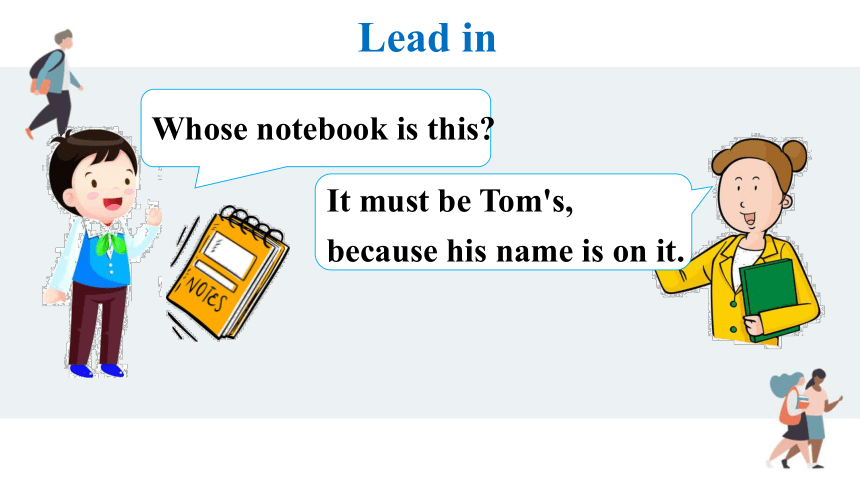
Unit 8 It must belong to Carla.
R·九年级全一册
第二课时
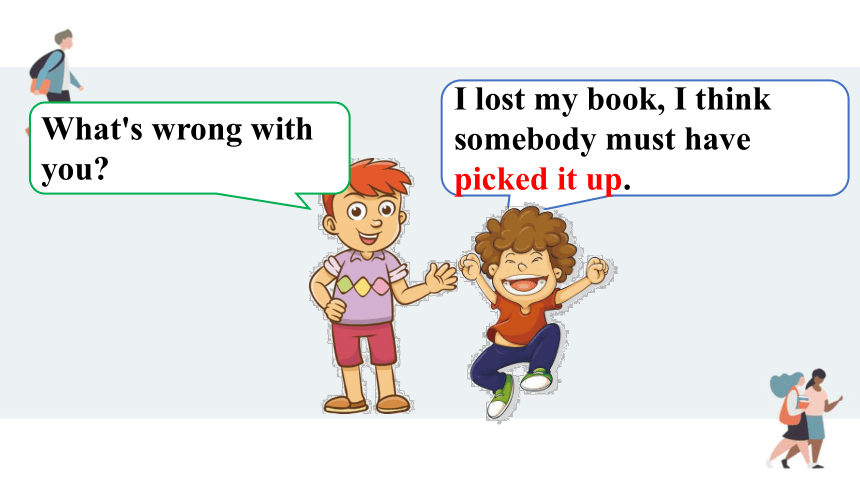
Whose notebook is this?
It must be Tom's, because his name is on it.
Lead in
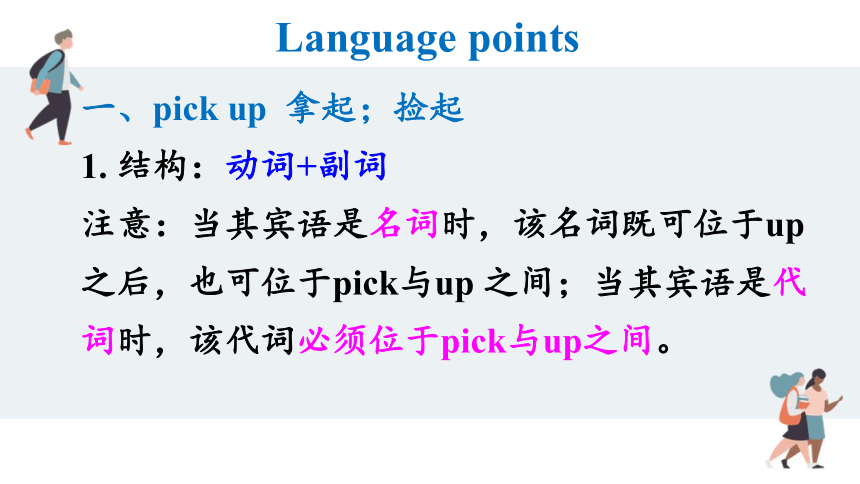
What's wrong with you?
I lost my book, I think somebody must have picked it up.
一、pick up 拿起;捡起
1. 结构:动词+副词
注意:当其宾语是名词时,该名词既可位于up之后,也可位于pick与up 之间;当其宾语是代词时,该代词必须位于pick与up之间。
Language points
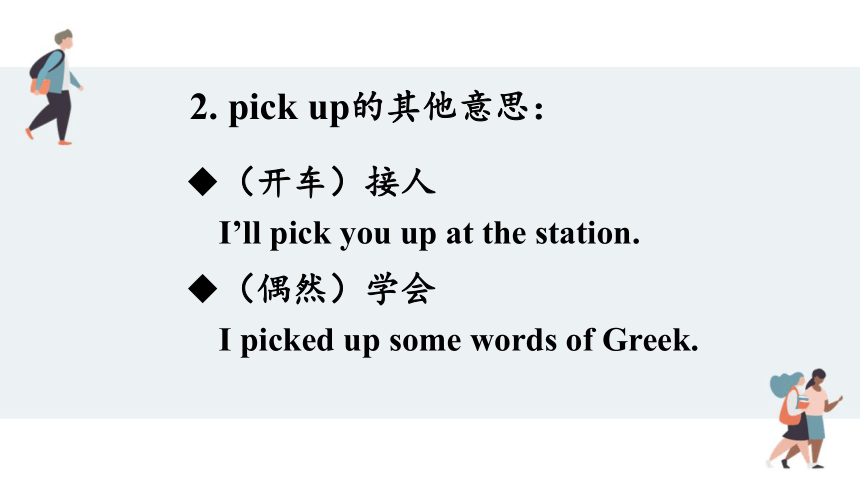
2. pick up的其他意思:
(开车)接人
I’ll pick you up at the station.
(偶然)学会
I picked up some words of Greek.
1. 情态动词不能表示正在发生或已经发生的事情,
只表示期待或估计某事的发生。
2. 情态动词ought和have,后面只能接带to的不定式。
二、情态动词
3. 情态动词没有人称、数的变化,即情态动词第三
人称单数不加-s。
4. 情态动词没有非谓语形式,即没有不定式、分词
等形式。
must
could
might
can’t
100%
probably true
20%~80%
possibly true
0%
almost not true
一定
可能
不可能
5. can可表示能力/允许/可能性/怀疑猜测,意为“可以,会,能”;can’t意为“不会,不能,不可以”,还有“不可能”之意。Could为can的过去式,用法与can类似,常用于过去时态中;could还可用于现在时态中表示委婉客气,相当于can;could也可表示惊讶怀疑,不相信。
He is honest. He couldn't be a thief.
6. may 意为“也许;可能;可以”,表示不太可能。对may的一般疑问句的回答:
肯定回答一般是:Yes, please./ Certainly./ Sure等
否定回答一般是: No, you can’t/mustn’t.
May I help you?
Sure. I'd like a cup of water.
7. might是may的过去式,与may用法类似,语气比may弱,表示推测的可能性更小,常用于肯定句和否定句中,不用于疑问句中。
Where’s Jane?
I’m not sure. She might be in the laboratory.
Why do you think the man is running?
He could be running for exercise.
情态动词+be+doing sth. 表示对正在发生的事情的推测
Why do you think the girl is crying?
She could be crying for the failing of the exam.
No, her cat died. She might be crying for her dead cat.
—Is Lisa at home?
—I’m not sure. She _____ be on the way home.
A. can’t B. could
C. should D. need
Practice
情态动词表推测:
can, could, must, may, might.
1. He could be running for exercise.
2. He might be running to catch a bus.
3. Why do you think the man is running?
Summary
THANKS
R·九年级全一册
第二课时
Whose notebook is this?
It must be Tom's, because his name is on it.
Lead in
What's wrong with you?
I lost my book, I think somebody must have picked it up.
一、pick up 拿起;捡起
1. 结构:动词+副词
注意:当其宾语是名词时,该名词既可位于up之后,也可位于pick与up 之间;当其宾语是代词时,该代词必须位于pick与up之间。
Language points
2. pick up的其他意思:
(开车)接人
I’ll pick you up at the station.
(偶然)学会
I picked up some words of Greek.
1. 情态动词不能表示正在发生或已经发生的事情,
只表示期待或估计某事的发生。
2. 情态动词ought和have,后面只能接带to的不定式。
二、情态动词
3. 情态动词没有人称、数的变化,即情态动词第三
人称单数不加-s。
4. 情态动词没有非谓语形式,即没有不定式、分词
等形式。
must
could
might
can’t
100%
probably true
20%~80%
possibly true
0%
almost not true
一定
可能
不可能
5. can可表示能力/允许/可能性/怀疑猜测,意为“可以,会,能”;can’t意为“不会,不能,不可以”,还有“不可能”之意。Could为can的过去式,用法与can类似,常用于过去时态中;could还可用于现在时态中表示委婉客气,相当于can;could也可表示惊讶怀疑,不相信。
He is honest. He couldn't be a thief.
6. may 意为“也许;可能;可以”,表示不太可能。对may的一般疑问句的回答:
肯定回答一般是:Yes, please./ Certainly./ Sure等
否定回答一般是: No, you can’t/mustn’t.
May I help you?
Sure. I'd like a cup of water.
7. might是may的过去式,与may用法类似,语气比may弱,表示推测的可能性更小,常用于肯定句和否定句中,不用于疑问句中。
Where’s Jane?
I’m not sure. She might be in the laboratory.
Why do you think the man is running?
He could be running for exercise.
情态动词+be+doing sth. 表示对正在发生的事情的推测
Why do you think the girl is crying?
She could be crying for the failing of the exam.
No, her cat died. She might be crying for her dead cat.
—Is Lisa at home?
—I’m not sure. She _____ be on the way home.
A. can’t B. could
C. should D. need
Practice
情态动词表推测:
can, could, must, may, might.
1. He could be running for exercise.
2. He might be running to catch a bus.
3. Why do you think the man is running?
Summary
THANKS
同课章节目录
- Unit 1 How can we become good learners.
- Section A
- Section B
- Unit 2 I think that mooncakes are delicious!
- Section A
- Section B
- Unit 3 Could you please tell me where the restroom
- Section A
- Section B
- Unit 4 I used to be afraid of the dark.
- Section A
- Section B
- Unit 5 What are the shirts made of?
- Section A
- Section B
- Review of Units 1-5
- Unit 6 When was it invented?
- Section A
- Section B
- Unit 7 Teenagers should be allowed to choose their
- Section A
- Section B
- Unit 8 It must belong to Carla.
- Section A
- Section B
- Unit 9 I like music that I can dance to.
- Section A
- Section B
- Unit 10 You're supposed to shake hands.
- Section A
- Section B
- Review of Units 6-10
- Unit 11 Sad movies make me cry.
- Section A
- Section B
- Unit 12 Life is full of the unexpected
- Section A
- Section B
- Unit 13 We're trying to save the earth!
- Section A
- Section B
- Unit 14 I remember meeting all of you in Grade 7.
- Section A
- Section B
- Review of Units 11-14